
Idaho Mugshot Law in Plain Terms
Booking photos begin with Idaho Code §20-601. The statute puts a photograph and fingerprints into county-jail booking. Publishing is another matter. No statewide roster is required, and no county must post every image. Disclosure stays unsettled too. Keep four questions apart: whether a photo was taken, which agency holds it, whether that record can be released, and whether a private site copied it. Private sites follow their own removal rules. No Idaho statute grants a blanket right to free removal. A "busted" label never changes the source record. The Legislature's §20-601 text places the photo inside booking, not on a website.
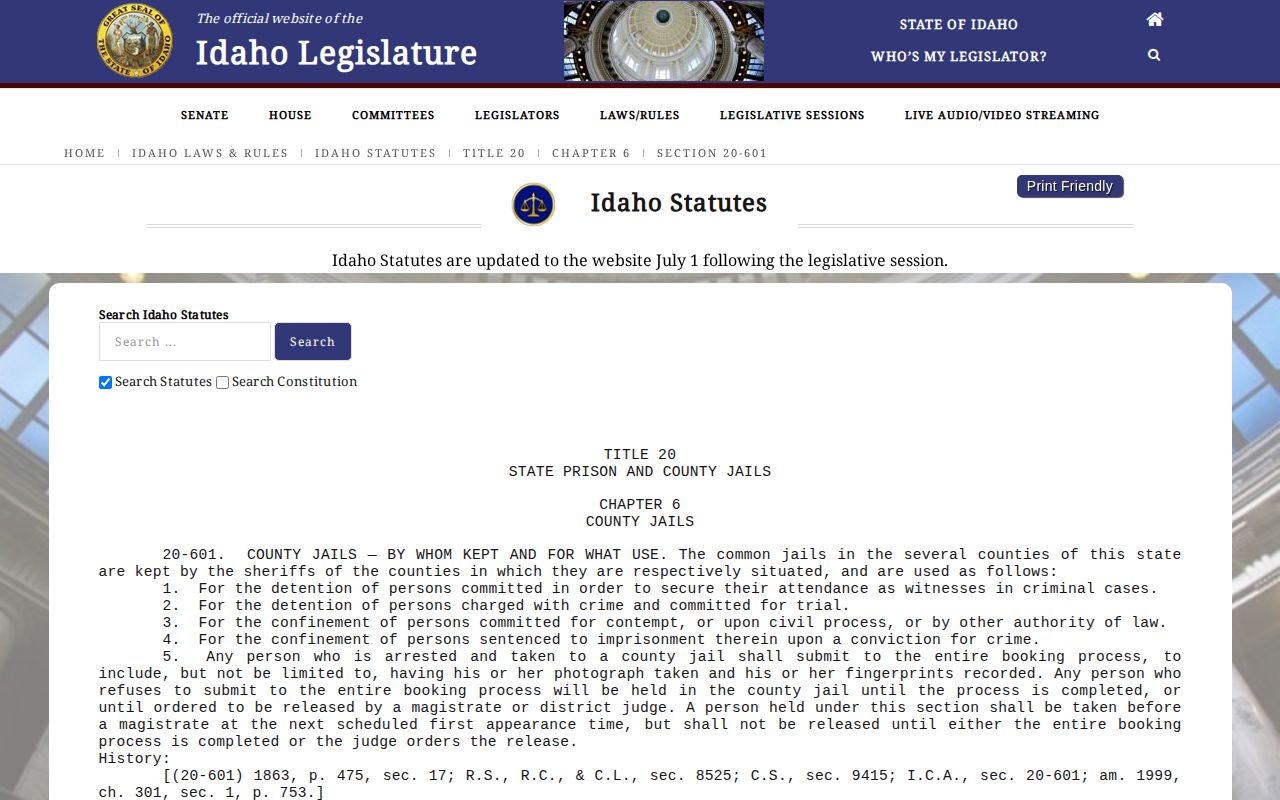
When a search turns up no image, contact the agency that holds the record and ask whether it can be released.
Idaho Public Records Access
Idaho's Public Records Act presumes openness. State and local records are open to inspect and copy unless a statute exempts part of the record. Idaho Code §74-102 grants that right. Websites are not required. The same section lists public arrest facts. Basic identifying details, the time and place of the incident and arrest, the charge, and papers handed to the arrested person all qualify. That list stops short of narratives, images, victim statements, and medical details. Each piece faces its own exceptions. Aim the request at the right custodian. Sheriffs and jails hold booking records, police hold incident reports, and the court clerk holds filed case papers. If an office withholds material, ask for the non-exempt parts with protected details blacked out.
Note: A roster with no entry still leaves the question of whether a request can produce the record.
Idaho Arrest Record Exceptions
Idaho Code §74-124 lets agencies hold back law-enforcement records. That power applies when release would cause a listed harm. Listed harms run from interference with enforcement and prejudice to a fair trial. Privacy invasion, source exposure, and safety risks are on the list too. "Investigatory" is not a magic word. The statute must fit the request. Protected details should be separated from releasable facts where possible. A charge or arrest date may be public. A witness name may stay sealed. So may a health detail or an active investigative fact. Other statutes guard particular information, including some child-abuse reporting identities. Juvenile files follow §74-105, covered in the juvenile section below. Ask the custodian to name the basis for a denial and release whatever is unprotected.
Idaho Mugshot Bill 620 Failed
House Bill 620 arrived in 2022. It proposed a narrow delay on some booking photos. The booking had to involve only a non-assault misdemeanor. Within 24 hours, the person had to be placed on a mental-health hold or transferred for care. The House passed it 69-0-1. The Senate Judiciary and Rules Committee then received the bill, and it died there. Exceptions existed, including release after a guilty or no-contest outcome. None of it became law. The bill history documents that legislative path, not present-day access rights, which still rest on §20-601 and the Public Records Act with no posting or free-removal mandate.
Alwin's Idaho Mugshot Evidence Ruling
Idaho courts have met booking photos in a different arena: trial evidence. In State v. Alwin, the Idaho Supreme Court asked whether a booking-style photo with ordinary mugshot markings was inadmissible under Evidence Rule 404(b). That rule governs evidence used at trial. It says nothing about public-record requests. Alwin weighs how a mugshot might sway jurors. It sets no duties for sheriffs answering record requests. Nor does it obligate any publisher to pull a photo.
Idaho Juvenile Record Limits
Idaho generally exempts juvenile court and correction records under Title 20, Chapter 5. One exception: a juvenile charged with a specified adult-like offense. Limited name, offense, and disposition information may be released. Courts can also close other proceedings by order. None of this creates a general right to publish a minor's booking photo. The 2026 update to §74-105 adds protection too. It shields specified victim and family information in Department of Juvenile Corrections custody-review-board records. When a juvenile name or image is missing, ask the custodian about the governing rule or order. Reposting the information is not the answer.
Idaho County Photo Policies Vary
Idaho sets no single photo rule for its county rosters. Booking photos appear on official jail listings in Ada, Blaine, Bonneville, Canyon, Cassia, Minidoka, and Power counties. Kootenai, Twin Falls, Bonner, and Nez Perce offer text or PDF views with no visible photos. Many smaller counties publish no roster at all.
Those gaps reflect interface choices, not separate laws. A text list can omit a photo the sheriff still keeps on file. Rosters also shift over time, so one county may look different next month. The county that handled the booking is the place to start. Jail lists often cover current custody only. The agency can hold a record long after release or transfer.
Find an Idaho Booking Record
Match each request to the office that holds the record. The sheriff or jail keeps booking intake. Police hold incident reports.
The court clerk has filed case events, ISP's Bureau of Criminal Identification covers state criminal history, and IDOC tracks prison or supervision status.
- Check the booking county. Search the official jail page if one is available, then confirm the person's name and custody status with the agency. The Idaho County Directory routes to local county sites and their published booking channels.
- Request the record. If a roster has no image or the person is released, ask the arresting agency for the booking photo and releasable arrest facts. Give a full name, date range, and booking or case number if known.
- Check the outcome. Ask the court clerk for the case register. A booking charge is not necessarily the filed charge, and jail release does not dismiss a case.
- Separate state custody. Use the IDOC offender search page for a person in state prison or under state supervision. That lookup is not a county booking-photo search.
Request the booking sheet, the photo, and the releasable arrest facts as three distinct items. If one piece is withheld, ask for the rest.
Also ask for the legal basis of any denial. Court records show outcomes; jail records show intake.
Idaho BCI Expungement Scope
Under Idaho Code §67-3004(10), ISP can expunge a fingerprint and criminal-history entry. The entry must be tied to an arrest or criminal summons. Three routes qualify. These are no indictment or information filed within one year, acquittal on all offenses, or dismissal of all charges. The one-year limit applies only to the no-charging route. ISP carves out a dismissal under §19-2604(1), the withheld-judgment law.
Applicants must supply agency or court proof of eligibility. The ISP form asks for the arrest date, charge, county, case number, and dismissal or acquittal date. The official ISP BCI page links to the current form. A dismissed charge can stay in BCI with its outcome noted until expungement is approved.
This process touches only the ISP repository. Local sheriff and police files, court copies, and private site copies stay put. Send proof separately to each one.
Idaho Clean Slate Record Shield
Idaho Code §67-3004(11) lets a qualifying person petition. The petition can shield eligible records from public view. Only nonviolent, non-assaultive offenses qualify. One offense, or several from a single incident, may fit in a granted petition. Five years must pass after the full sentence ends, counting probation, parole, fines, and restitution. One petition is allowed per lifetime.
The Idaho Supreme Court's Clean Slate instructions supply the forms and explain the court process. Shielding restricts access. It does not destroy the court record. The record stays open to the defendant and authorized justice officials. A county booking photo or a publisher's copy is not deleted by the order.
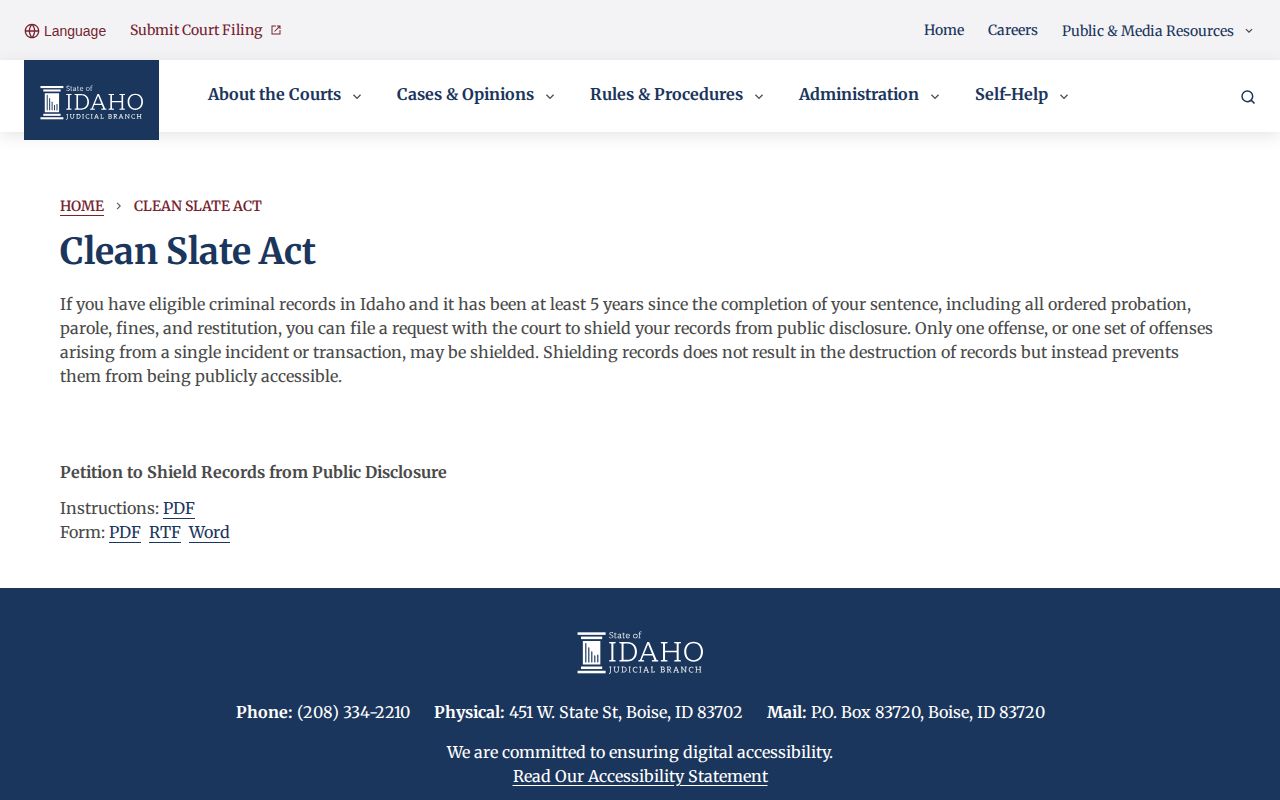
The court order changes access to the case file alone. Any separate jail or publisher copy needs its own review with its own custodian.
Correct an Idaho Booking Photo
Start with the custodian. Sheriff or jail for booking photos, police for incident records, court clerk for case entries, and ISP for BCI history. Identify the exact record with its URL or number, the person's name, booking date, arresting agency, and case number if known. Attach a dismissal, acquittal, expungement, or shielding order and name the field needing correction.
Keep the response. If only part is withheld, ask for the non-exempt portions. Once the official record changes, send proof to each publisher holding a separate copy; a source correction does not update those copies on its own. Limit any personal or juvenile information you share.
Free Publisher Policies for Idaho
These private sites carry secondary copies, not Idaho agency or court records. Entries can be stale or incomplete. Verify the charge and outcome with the official custodian.
Policies can change, and a private update cannot erase an official record.
| Publisher | Documented free policy and limit |
|---|---|
| Busted Newspaper | Its stated free process asks for the listing URL, identity and contact details, reason, and legal proof such as dismissal, acquittal, expungement, or sealing. It estimates 5 to 10 days; this is not a state deadline. |
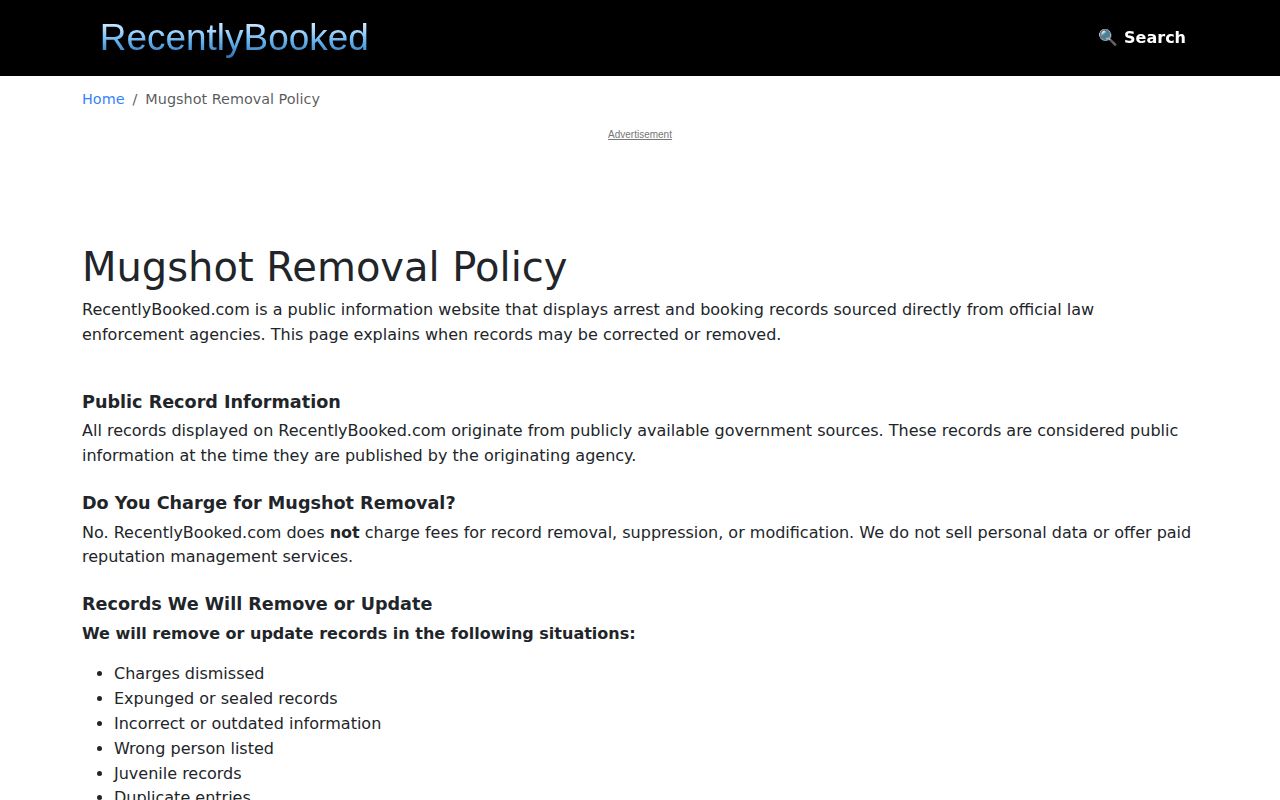
| RecentlyBooked | Its policy says updates, suppression, and removal are free for dismissed, expunged, sealed, wrong-person, juvenile, duplicate, or outdated entries. It asks for listing and identity details and supporting proof; accurate current public records generally remain. |
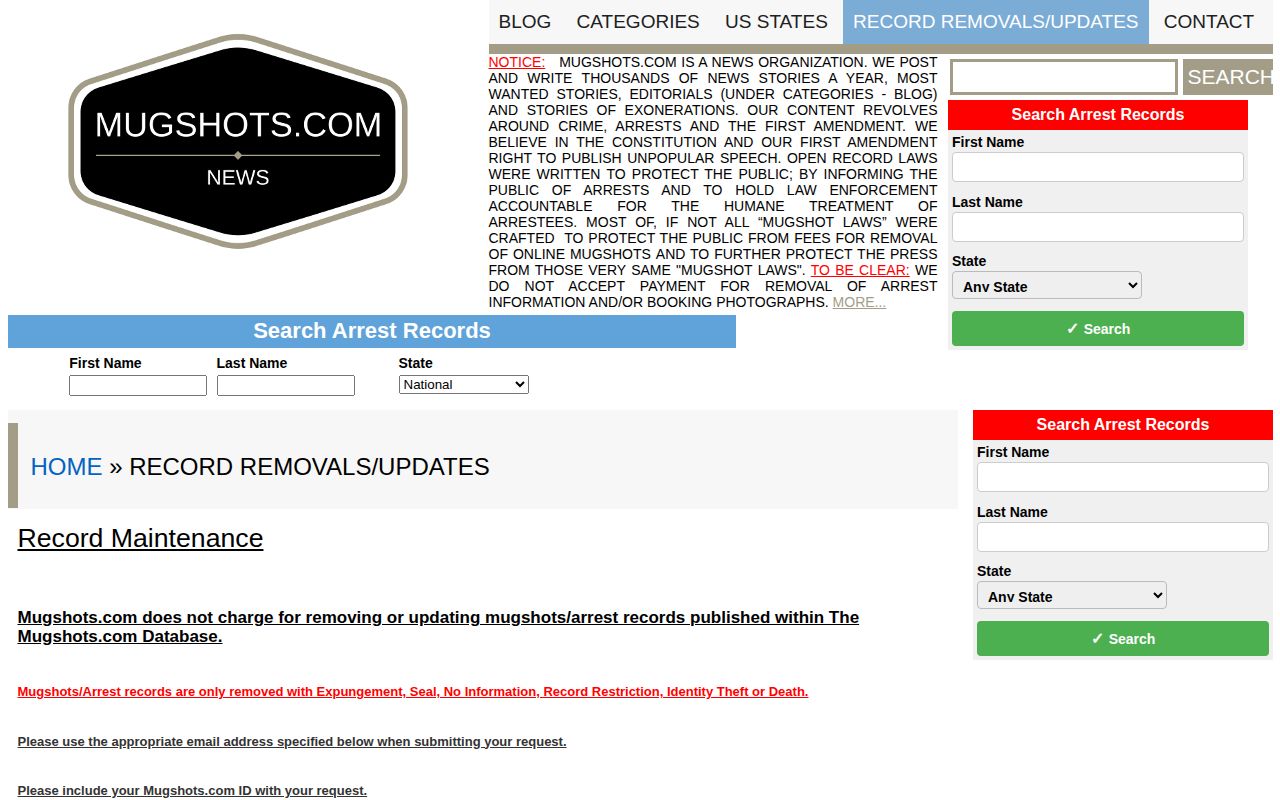
| Mugshots.com | It says updates or removal are free and asks for its listing ID and papers supporting grounds such as expungement, sealing, identity theft, or no information. It estimates up to 10 business days and may update a favorable disposition instead of erasing the entry. |
| Arrests.org | The Idaho search interface and checked public pages showed ads and privacy opt-outs, but no clear free individual-record correction or removal policy. An opt-out is not proof a listing will be removed. |
| Mugshots Zone | The Idaho path and “Remove Mugshot” link returned the home page when checked. Its privacy page did not document a general adult-record correction rule or free deadline; coverage and removal were unverified. |
Publisher removal pages promise less than people hope. They set company rules, not Idaho rights or legal guarantees. Start with the agency's own arrest record and the court docket first, then read the publisher's exact steps before paying or submitting anything. The Mugshots.com record-maintenance page covers that site's internal updates only; a sheriff's booking file stays untouched by whatever it says.
A publisher's policy touches only its own copy; Idaho's original booking and court record stays with the agency. The RecentlyBooked policy lists situations where the site says it may correct or remove an entry. It is a voluntary private process.
The listed grounds describe one site's policy, not a guaranteed result for an Idaho record. The Mugshots Zone page shows a privacy-choice notice rather than a stated Idaho listing or adult-record removal rule. Read it as policy language only.
The notice does not establish an Idaho roster or promise a record change.
Google Updates Follow Source Changes
Google's outdated-content process works only after the source page has changed or disappeared. It refreshes the index. It cannot seal a case or expunge a state record. Nor can it clear a page that still lives elsewhere.
Beware paid promises to erase every official file, website copy, and search result. No general Idaho law guarantees that outcome. Fix the source first. Then use a documented publisher process where one exists. Skip sending sensitive records to an unverified service. Before repeating an arrest claim, check the disposition and confirm the identity match.